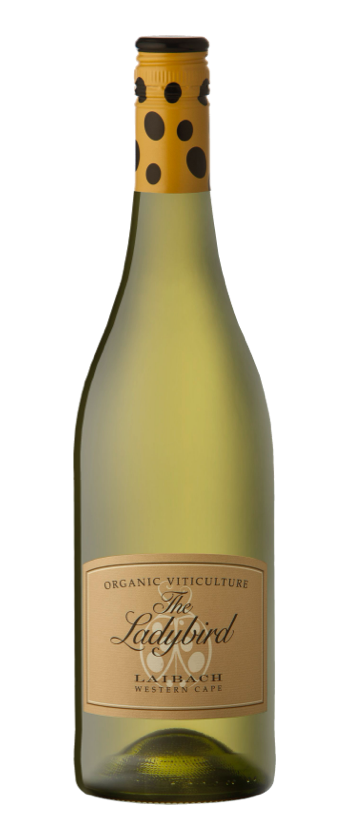
White Organic
Lovely light straw colour. The nose is fresh with hints of pineapple, white peach and blossoms. The oak is very subtle and are beautifully balanced and integrated. Probably the freshest Ladybird White we have produced. A lovely wine for many occasions. Perfect for a summer day, but with enough complexity to complement fresh summer dishes.
2,994 Ft 750 ml
16 in stock
| Weight | 1.5 kg |
|---|---|
| Style | |
| Évjárat |
| Region | Stellenbosch, South Africa |
|---|
| Grape Varieties | 87% Chardonnay 13% Chenin Blanc |
|---|---|
| Alcohol Percentage | 13.5 % |
| Ph | 3.5 |
| Acidity | 5.7 g/L |
| Litre Price (HUF) | HUF 6653 / Litre |
| Aggregated Critic Score | 90 / 100 |
|---|---|
| Average User Rating | 4.5 Stars |
In the Cellar
We proudly present our new vintage of our oldest organic white we produce. This wine we make since the 2005 vintage and was the first organic certified white wine in the famous Stellenbosch appellation. The wine is made by using old school winemaking techniques. Not your typical “text book stuff” techniques and definitely will let any professor in winemaking cringe with fear. This wine is mostly of Chardonnay of our farm but also include some of the old block Chenin that we use in our top end Sur Lie Chenin Blanc.
Our Chardonnay vineyards are all over 15 years old and are grown in deep clay soil and with no irrigation. The vintage 2019 was a very tough vintage with very low crop because of a severe 3 year drought. We usually pick whites in February on our farm and we only use manual picking. We do not destem and we only use whole bunch pressing. Like with our other wines we do not use any finning agents. We do not use enzymes and we do not settle. We ferment wild, warm, dirty and with no sulfur. 50% of the fermentation is done in barrel and some portion also in raw cement concrete eggs. We leave the wine on the primary sediment for 11 months without sulfur and without too much attention. The wine is bottled in January.
About the winery: Laibach
At Laibach Vineyards they are committed to producing wines of outstanding quality, that best reflect the unique terroir and the microclimate of the Simonsberg ward near Stellenbosch, one of South Africa’s prime wine-growing areas for noble cultivars. They are committed to using a blend of tradition and innovation, fostering a philosophy of continuous improvement.
The Stellenbosch Region
The historical town of Stellenbosch, the ‘town of oaks’, boasts a winemaking tradition that stretches back to the mid-17th century. Stellenbosch is the business hub of the South African wine industry. The town is also the educational and research centre of the winelands. Stellenbosch University is the only university in South Africa that offers a degree in viticulture and oenology, and many of the country’s most successful winemakers are alumni. Stellenbosch has the most vineyard plantings in the winelands. Conditions in this district are particularly well suited to many of the noble grapevine varieties. The rapidly increasing number of wine estates and producers (more than 200) includes some of the most famous names in Cape wine. The district, with its mix of historic estates and contemporary wineries, produces excellent examples of almost all the noble wine grape varieties and is known for its blended reds. The Simonsberg-Stellenbosch ward encompasses several well-known estates and private cellars. The wines from this ward are predominantly red, made from Cabernet Sauvignon, Merlot and Shiraz, with wines made from the locally bred Pinotage variety also regularly reaping awards locally and internationally. There are four wards already demarcated in the hills of Bottelary in the Stellenbosch district, all of them again benefiting from cooling summer breezes. These are Papegaaiberg, Devon Valley, Bottelary and Polkadraai Hills. Several estates and private cellars have distinguished themselves in terms of quality wines in these wards, especially the Bottelary ward, Pinotage again being prominent here. The scenic Jonkershoek Valley is home to several top producers and boutique wineries. The higher elevations and textured soils make the valley ideal for growing Cabernet Sauvignon and other Bordeaux varieties. Banghoek is relatively new as a viticultural area with most vineyards planted in the last 20 years. It is mainly known for Sauvignon Blanc and red Bordeaux varieties.