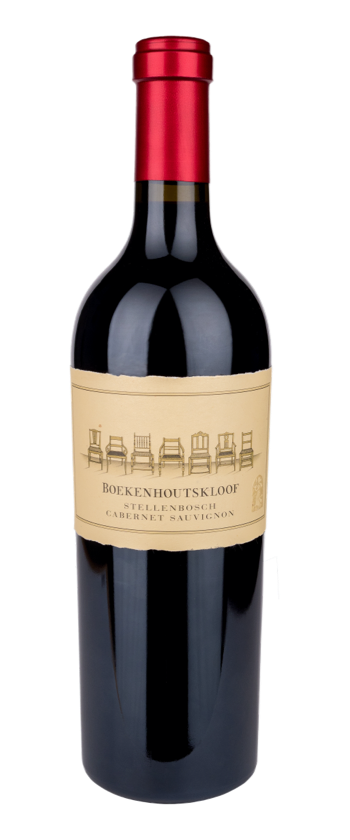
Cabernet Sauvignon Stellenbosch
The nose is complex and alluring, offering redcurrant, black cherry and red plum aromas with whiffs of Herbes de Provence, Cape fynbos and clay dust. The red stone fruit of the nose follows through with flavours of youngberry, boysenberry and notes of lead pencil, pipe tobacco and tealeaf on a smooth palate. Fine-grained powdery tannins contribute to a certain nervosité on the midpalate, juxtaposed against the opulence of fragrant fruit, firm acidity and smoky cedarwood undertones from integrated French oak. Vibrant berry fruit persists on a clean, focused finish.
11,994 Ft 750 ml
3 in stock
| Weight | 1.5 kg |
|---|---|
| Colour | red |
| Style | |
| Évjárat |
| Region | Stellenbosch, South Africa |
|---|
| Grape Varieties | 100% Cabernet Sauvignon |
|---|---|
| Alcohol Percentage | 14.7 % |
| Ph | 3.67 |
| Acidity | 5.4 g/L |
| Litre Price (HUF) | HUF 26653 / Litre |
| Awards | Platter’s Guide – 94 Points, 4,5 Stars |
|---|---|
| Aggregated Critic Score | 88 / 100 |
| Average User Rating | 3.5 Stars |
In the Cellar
Our Cabernet Sauvignon from the Helderberg area shows minerality and a classic graphite-like profile derived from the unique combination of soil type, high-altitude slopes with its specific aspect and the mild maritime influences from the cool False Bay coast. The warm, dry growing conditions of the 2016 vintage restricted yields, but offered exceptionally small berries with wonderful concentration and fruit flavour. The grapes underwent a cold maceration in stainless steel fermentation vessels and then fermented at temperatures between 27° and 30° with frequent pump-overs and occasional delestage to extract aromas, colour and tannins. After alcoholic fermentation, a prolonged malolactic fermentation occurred naturally in 225 litre barriques. The wine was matured for 18 months) in 60% new French oak barrique from our preferred coopers, Sylvain and Saury.
About the winery: Boekenhoutskloof
Boekenhoutskloof was established in 1776. Located in the furthest corner of the beautiful Franschhoek valley, the farm’s name means “ravine of the Boekenhout”. Boekenhout is an indigenous Cape Beech tree greatly prized for furniture making. In 1993 the farm and homestead were bought and restored, and a new vineyard planting programme was established that now includes Syrah, Cabernet Sauvignon, Cabernet Franc, Grenache, Semillon, and Viognier.
The Stellenbosch Region
The historical town of Stellenbosch, the ‘town of oaks’, boasts a winemaking tradition that stretches back to the mid-17th century. Stellenbosch is the business hub of the South African wine industry. The town is also the educational and research centre of the winelands. Stellenbosch University is the only university in South Africa that offers a degree in viticulture and oenology, and many of the country’s most successful winemakers are alumni. Stellenbosch has the most vineyard plantings in the winelands. Conditions in this district are particularly well suited to many of the noble grapevine varieties. The rapidly increasing number of wine estates and producers (more than 200) includes some of the most famous names in Cape wine. The district, with its mix of historic estates and contemporary wineries, produces excellent examples of almost all the noble wine grape varieties and is known for its blended reds. The Simonsberg-Stellenbosch ward encompasses several well-known estates and private cellars. The wines from this ward are predominantly red, made from Cabernet Sauvignon, Merlot and Shiraz, with wines made from the locally bred Pinotage variety also regularly reaping awards locally and internationally. There are four wards already demarcated in the hills of Bottelary in the Stellenbosch district, all of them again benefiting from cooling summer breezes. These are Papegaaiberg, Devon Valley, Bottelary and Polkadraai Hills. Several estates and private cellars have distinguished themselves in terms of quality wines in these wards, especially the Bottelary ward, Pinotage again being prominent here. The scenic Jonkershoek Valley is home to several top producers and boutique wineries. The higher elevations and textured soils make the valley ideal for growing Cabernet Sauvignon and other Bordeaux varieties. Banghoek is relatively new as a viticultural area with most vineyards planted in the last 20 years. It is mainly known for Sauvignon Blanc and red Bordeaux varieties.